Throwing Light on Trademark Class 1: Chemicals
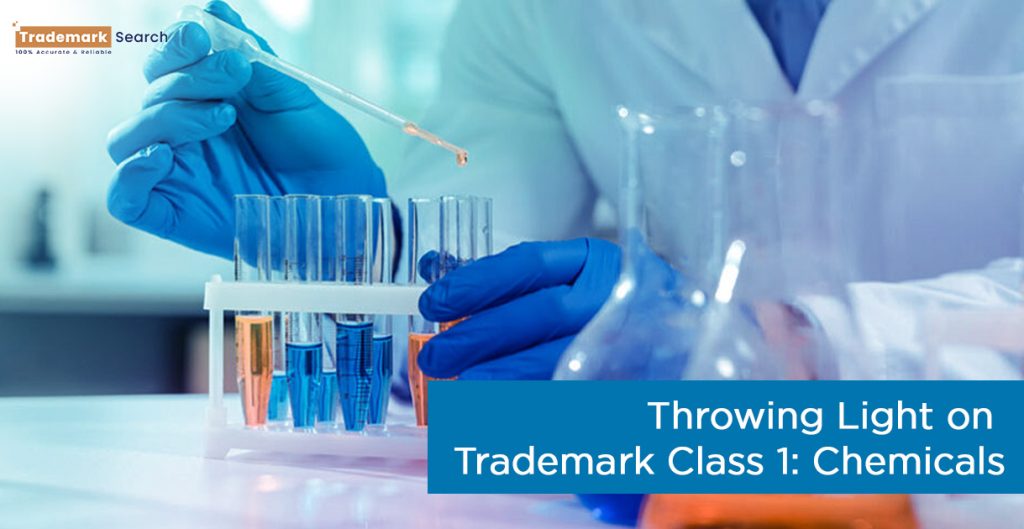

Trademark class 1 includes chemicals utilised in industries, agriculture and science, excluding those used for veterinary or medical purposes. This class also consists of various products like chemical reagents, industrial chemicals, and chemicals utilised in manufacturing. It includes unprocessed plastics, unprocessed artificial resigns, fire extinguishing compositions, soldering and tempering preparations, and chemical substances for preserving the food materials.
Moreover, Trademark Class 1 chemicals comprise adhesives used in the industries, tanning substances, and unrefined artificial resigns. With the help of this classification, businesses may safeguard their trademarks on necessary chemical substances and formulations used in a wide range of industrial and scientific processes. Classifying these compounds, Class 1 promotes innovation and ensures equitable competition in the marketplace by aiding in the identification and legal protection of the distinctive products of various manufacturers.
What are Trademark Classifications?
A system used to organise and categorise goods and services for trademark registration is known as Trademark classifications. This system makes it easier and simpler for companies and law enforcement to manage and defend trademarks by helping identify and distinguish different types of goods. This system is widely based on the Nice Classification, developed by the Nice Agreement (1957). This trademark classification divides the goods and services into 45 classes: 34 for goods and 11 for services.
However, each class represent a specific category of the services. Trademark Class 1 comprises the chemicals utilised in the industry. Moreover, the service class includes specifications such as advertising (class 35) and legal services (class 45). Additionally, to ensure the brand is protected in those particular specifications, companies must indicate the specific criteria under which their goods and services fall while applying for trademark registration.
This classification system helps simplify the search and registration process and also helps prevent trademark conflicts among identical trademarks in different sectors. By specifying the extent of trademark protection, companies can clearly define the scope of trademark protection, effectively protect their brand identity, and guarantee that their products and services are readily identified in the marketplace. Trademark classification plays a vital role in upholding a well-organized and efficient global trademark registration system.
Here are some examples of product classes:
- Class 1: Chemicals
- Class 2: Paints
- Class 3: Cosmetics
- Class 4: Cleaning agents.
- Class 5: Pharmaceuticals
Following are some examples of the service classes:
- Class 35: Advertising
- Class 36: Insurance
- Class 37: Construction
- Class 38: Telecommunications
- Class 39: Transport
- Class 40: Treatment of materials
Further Distribution of Class 1 Chemicals
Class 1A: Substances Used in Science, Industry, and Photography
This course includes chemicals used in industry, research, and photography. Products like adhesives, sealants, fungicides, herbicides, bleaching solutions, laundry detergents, and industrial gases might be included in this category.
Class 1B: Sealants and Adhesives
This class includes materials used for sealing or attaching two surfaces, such as caulk, sealer, tape, and adhesive.
Class 1C: Pesticides, Herbicides and Fungicides
Items in this class are meant to eradicate or manage weeds, fungi, and pests. Some examples of goods that might be included in this category are weed killers, insecticides, herbicides, and fungicides.
Class 1D: Bleaching Procedures and Additional Materials for Laundry Use
Products used for eliminating spots or bleach textiles are included in this class. Products like softener for fabrics, washing machine detergent, and bleach would be included in this category.
Class 1E: Industrial Gases
Gases with a range of industrial uses are included in this class. Products such as oxygen, nitrogen, carbon dioxide, and acetylene would be included in this class.
Class 1F: Welding Gases
Gases utilised in welding and cutting operations are included in this class. Products such as oxygen, nitrogen, carbon dioxide, and acetylene would be included in this class.
Class 1G: Explosives
Products that are used to cause an explosion are included in this class. Products that might be included in this category include gunpowder, TNT, and dynamite.
Read more: All About Trademark Class 2 – Paints, Varnish and Coatings
Essential Goods Under Class 1
- Compost
- Tempering and soldering preparations
- Chemical substances for preserving foodstuffs
- Manures
- Tanning substances
- Industrial adhesives
- Unprocessed plastics
- Unprocessed artificial resins
- Fire extinguishing compositions
- Salt is used for the preservation of anything except foodstuffs
Goods Not Under Trademark Class 1
- Unprocessed natural resins (Class 2 Trademarks)
- Chemical items (Trademark Class 5) for application in medical science
- Herbicides, fungicides, and solutions for eliminating rodents (Trademark Class 5)
- Stationery and household adhesives (Trademark Class 16)
- Salt for food preservation (Trademark Class 30)
- Straw mulch (Trademark Class 31)
Detailed Goods Under Trademark Class 1
Following are some more details of the goods that are included in the Trademark class 1:
| Goods List | Goods List |
|---|---|
| Artificial sweeteners [chemical preparations] | Adhesives for industrial purposes |
| Aldehydes* | Albumin [animal or vegetable, raw material] |
| Acids | Alcohol* |
| Actinium | Alkalies |
| Aluminium acetate* | Aluminium chloride |
| Ammoniacal salts | Acetate of cellulose, unprocessed |
| Agar-agar | Americium |
| Aluminium hydrate | Ammonium aldehyde |
| Artificial resins, unprocessed | Acetic anhydride |
| Activated carbon / Activated charcoal | Adhesive preparations for surgical bandages |
| Aluminium alum | Agricultural chemicals (except fungicides, herbicides, insecticides, parasiticides) |
| Anhydrous ammonia | Alkaline-earth metals |
| Antimony | Acetone |
| Adhesive for billposting | Alkaline iodides for industrial purposes |
| Aluminium silicate | Ammonia [volatile alkali] for industrial purposes |
| Amyl acetate | Antimony sulfide |
| Aluminium iodide | Anti-frothing solutions for batteries / accumulators |
| Acetylene | Albumenised paper |
| Alkalie metals | Ammonia alum |
| Anthranilic acid | Ammonium salts |
| Amyl alcohol | Aluminium |
| Aluminium oxide | Acids |
| Argon | Acetic acid |
| Adhesives for paperhanging / wallpaper | Acetylene tetrachloride |
| Antimony oxide | Anti-sprouting preparations for vegetables |
| Astatine | Animal charcoal |
| Aluminium | Anhydrides |
| Arsenic | Anti-incrustants |
| Adhesives for wall tiles | Agglutinants for concrete |
| Automobile body fillers | Anti-tarnishing chemicals for windows |
| Auxiliary fluids for use with abrasives | Antistatic preparations (non-household) |
| Arsenious acid | Anti-knock substances for engines |
| Alkaline metals | Ammonia* |
| Acidulated water for recharging accumulators | Animal carbon |
| Animal carbon preparations | Anti-boil preparations for engine coolants |
| Alkaline iodides | Acidulated water for recharging batteries |
| Anti-frost preparations for windows | Aluminium |
| Ammonia | Antimony |
| Alginates for the food industry | Alginates for industrial purposes |
| Bacterial preparations (non-medical/veterinary) | Benzene derivatives |
| Benzoic acid | Benzene-based acids |
| Barium compounds | Boric acid for industrial purposes |
| Bacteriological preparations (non-medical/veterinary) | Brake fluid |
| Bismuth | Blueprint cloth |
| Bromine for chemical purposes | Biological preparations (non-medical/veterinary) |
| Biochemical catalysts | Beer-clarifying and preserving agents |
| Bacteriological preparations for acetification | Bismuth subnitrate for chemical purposes |
| Barium | Bismuth |
| Benzoic sulfimide | Basic gallate of bismuth |
| Blood charcoal | Bate for dressing skins |
| Biological tissue cultures (non-medical/veterinary) | Bicarbonate of soda for chemical purposes |
| Borax | Bauxite |
| Baryta | Barium sulfate |
| Bacterial preparations | Beer preserving agents |
| Blue vitriol / Copper sulfate | Benzoic acid |
| Balm of gurjun for varnish | Biochemical |
| Barytes | Brazing fluxes |
| Bases [chemical preparations] | Baryta paper |
| Bentonite | Biological |
| Blueprint paper | Biological |
| blue vitriol | bromine |
| beryllium | blueprint paper |
| bichloride of tin | biochemical |
| biological preparations | birdlime |
| barium sulfate | bichromate of potassium |
| brazing preparations | biological tissue cultures |
| blueprint cloth | brickwork preservatives, except paints and oils |
| bismuth | brake fluid |
| bichromate of soda | carbon for filters |
| cyanides [prussiates] / prussiates | calcium carbide |
| chemical preparations to prevent mildew | carbolineum for the protection of plants |
| chromic salts | carbon |
| chromic acid | caesium |
| carbonic hydrates | calcium cyanamide [fertiliser] |
| curium | calcium salts |
| carbon disulfide | chemical additives for oils |
| chlorine | casein for industrial purposes |
| carbide | chemical intensifiers for paper |
| currying preparations for leather | chemical intensifiers for rubber |
| calcined soda | corrosive preparations |
| californium | chlorides |
| carbonates | currying preparations for skins |
| compost | chimney cleaners, chemical |
| cymene | camphor, for industrial purposes |
| carbon tetrachloride | chromic oxide |
| solutions for cyanotype | distilled water |
| dolomite for industrial purposes | enzymes for industrial purposes |
| enzymes for the food industry | epoxy resins, unprocessed |
| erbium | esters |
| ethyl alcohol | ethyl ether |
| europium | fireproofing preparations |
| formic acid | fatty acids |
| fish meal fertilisers | fire extinguishing compositions |
| foundry sand | fluorspar compounds |
| ferments for chemical purposes | formic aldehyde for chemical purposes |
| ferrocyanides | fat-bleaching chemicals |
| fissionable chemical elements | fermium |
| fluorine | glass-staining chemicals |
| glutamic acid for industrial purposes | glass-frosting chemicals |
| gallnuts | glycerides |
| glucose for the food industry | glucose for industrial purposes |
| gluten for the food industry | glue for industrial purposes |
| glaziers’ putty | gallotannic acid |
| glucosides | gluten for industrial purposes |
| heavy water | helium |
| holmium | hydrogen |
| hypochlorite of soda | hyposulfites |
| industrial chemicals | iodic acid |
| iodine for industrial purposes | kaolin / china clay / china slip |
| ketones | kieselgur |
| krypton | lead oxide |
| leather-impregnating chemicals | leather glues |
| lactic acid | lead acetate |
| lithium | loam |
| lead arsenate | lanthanum |
| litmus paper | leather-dressing chemicals |
| methane | manganese dioxide |
| methyl ether | mercuric oxide |
| mercury salts | naphthalene |
| nitrogenous fertilisers | mercury |
| methyl benzene | neptunium |
| neon | must-fining preparations |
| nitrate paper | nitrates |
| nitrogen | methyl benzol |
| nitrous oxide | nitrate of uranium |
| nitric acid | malt albumen |
| neodymium | metalloids |
| manganate | oil-separating chemicals |
| oleic acid | olivine [silicate mineral] |
| opacifiers for glass | opacifiers for enamel |
| oxalates | oxalic acid |
| oxygen | peat [fertiliser] |
| power steering fluid | photographic developers |
| praseodymium | photographic paper |
| phosphoric acid | plasticisers |
| phosphorus | peat pots for horticulture |
| pectin for industrial purposes | protactinium |
| photographic emulsions | photosensitive plates |
| picric acid | propellant gases for aerosols |
| pectin for the food industry | photographic sensitisers |
| palladium chloride | photographic paper |
| phosphates [fertilisers] | paper pulp |
| photometric paper | phosphatides |
| promethium | potting soil |
| radium for scientific purposes | radon |
| rare earths | rhenium |
| rock salt | rubber preservatives |
| rubidium | saccharin |
| salicylic acid | sal ammoniac |
| silver nitrate | silver salt solutions for silvering |
| sal ammoniac spirits | sulfuric acid |
| sulfuric ether | sumac for use in tanning |
| sensitised plates for offset printing | silicon |
| sulfurous acid | soda ash |
| sodium | sulfur |
| sulfides | sensitised photographic plates |
| stearic acid | sulfates |
| silicates | silicones |
| salt, raw | sensitised films, unexposed |
| sulfonic acids | strontium |
| thulium | tannic acid |
| thiocarbamide | |
| tree cavity fillers [forestry] | tan-wood |
| toning salts [photography] | thorium |
| tan | toxic gas neutralisers |
| tanning substances | transmission fluid |
| thallium | toluol / toluene |
| compositions for threading | tungstic acid |
| titanite | tannin |
| uranium oxide | uranium |
| vinic alcohol | viscose |
| vulcanisation accelerators | vulcanising preparations |
| water-purifying chemicals | water-softening preparations |
| wax-bleaching chemicals | wine finings |
| witherite | wood alcohol |
| X-ray films, sensitised but not exposed | xenon |
| yttrium | zirconia |
What is the Process of getting Registered under Trademark Class 1?
You must follow a few steps to register under Trademark Class 1, including chemicals in industries, science, and agriculture. By following the given procedure, you can secure trademark protection for your chemicals under Trademark Class 1, ensuring your brand distinctiveness and legal protection.
Below given is the detailed procedure:
- Preliminary research: Firstly, you must ensure to conduct a search that the trademark you intend to register is unique and non-existing in the marketplace. You can do this through an online trademark database offered by the national or international trademark offices.
- Choose the specific class: You must ensure that your chosen product falls under trademark class 1. However, this class includes chemicals used in various places such as industry, science, agriculture, unprocessed artificial resins, unprocessed plastics, adhesives, etc.
- Prepare the application: You must provide the name, logo or symbol you want to trademark. After that, you will have to clearly describe and give detailed information about the products associated with the trademark to the respected authority. Moreover, you will also have to confirm and guarantee that your products are correctly classified under trademark class 1.
- File Application: After completing all the formalities, you must apply to the national trademark office if you want protection in only one country. However, suppose you are seeking international security as well. In that case, you must consider filing the trademark application through the Madrid system, which allows you to file your product trademark for international registration.
- Examination process: The associated trademark authority will review your application to ensure that it complies with the legal requirements and check for conflicts with any existing trademarks. However, the examiner might also request additional information or clarification during this procedure.
- Publication: The trademark will be published in the official journal or gazette once the examination is cleared. Moreover, this also makes the public eligible to oppose if the trademark infringes on their rights.
- Opposition duration: This is usually 30-90 days, during which the present third parties can file oppositions against the trademark registration.
- Registration: Finally, there are no registration files. If any opposition is present and resolved in favour of the trademark applicant, the trademark will be registered according to the application. The trademark applicant will receive a certification of registration under the specific trademark.
- Renewal and Maintenance: To maintain the protection and security of your trademark, you must renew it periodically, usually every ten years. You must file renewal applications and pay the required charges.
What are the Benefits of Registering under Trademark Class 1?
Registering under trademark class 1 has various benefits, particularly for companies and businesses dealing with chemicals in science, agriculture, and other industries. Here are some advantages of registering under the trademark class 1:
- Market Advantage: Registering a trademark might give you an advantage over competitors by creating a substantial presence in the market. It sets your items apart from rivals, fostering client loyalty and drawing in new business.
- Legal Protection: Registering under the trademark class 1 offers the trademark owner exclusive rights, allowing them to legally prevent other people from using a similar name, logo or mark on the related products. This protection is crucial for maintaining the brand identity and avoiding market confusion.
- Asset Value: Unlike intangible property, trademarks can increase in worth over the years. They can be sold, franchised, or licenced, opening up new income sources for the company.
- Brand Recognition: Increased brand familiarity via registration makes it easier for customers to recognise and believe in a product. This is especially crucial in the chemical sector, where dependability and safety are essential.
- Legal Recourse: Owning trademark registration gives you more legal clout in the event of infringement. Owners of trademarks may pursue legal expenses, damages, and restraining orders as remedies.
- Worldwide Growth: Registration under trademark Class 1 makes expanding into foreign markets more accessible. Businesses may ensure constant brand identification globally by extending their registered trademark coverage to numerous countries using mechanisms such as the Protocol from Madrid.
- National Coverage: Unlike standard law entitlements, which could be restricted to particular regions, trademark registration protects the country in many countries.
- Deterrence Against Infringement: A registered trademark serves as a warning to prospective infringers. Your registration’s public record alerts people to your rights and lessens the possibility of accidental infringement.
Some Famous Examples of Class 1 Trademark
- TATA: A wide range of chemicals, manures, fertilisers, fungicides, insecticides, tanning agents, industrial adhesives, etc.
- Dettol: Preparations and substances for water purification and treatment.
- Ajinomoto: Artificial sweeteners, tanning agents, and food preservation chemicals
- Nirma: Polymers, firefighting mixtures, food-preserving agents, tanning agents, industrial adhesives, etc.
- Fevicol: Industrial adhesive made of synthetic resin
- Pidilite: Industrial synthetic resins, adhesives, and chemicals
- Atul: Chemicals used in industry are produced by Atul Ltd.
- Coromandel: Chemicals and fertilisers.
- Godrej: Reagents, chemicals, immunological, biologicals, enzymes, etc.
- GACL: A wide range of chemicals, manures, fertilisers, fungicides, insecticides, tanning agents, industrial adhesives, etc.
- Kingfa: Fire extinguishing compositions, raw resins, plastics, etc.
- Plastiblends: Chemical goods and additives.
- UPL: Chemicals and fertilisers for use in agriculture.
- Nilkamal: Low-density polyethene, polypropylene, poly-ethylene, terephthalate, polystyrene, polycarbonate, etc., are nilkamal materials.
- BASF: A wide range of chemicals, manures, fertilisers, fungicides, insecticides, tanning agents, and industrial adhesives.
Conclusion
In brief, trademark class 1 comprises chemicals employed in industries, agriculture, and science. It excludes those utilized for veterinary or medical purposes. To get expert assistance in trademark monitoring and trademark Objection, visit Trademark Search.
Frequently Asked Question
What class of trademark is chemicals?
Trademark Class 1: Chemicals; Chemical items utilised in industry, science, and agriculture, including those employed in producing goods from other classes, are primarily included in Class 1.
What is class 1 in trademarks?
Class 1 includes chemicals used in forestry, agriculture, horticulture, science, industry, manures, unprocessed artificial resins, unprocessed plastics, compositions for extinguishing fires, tempering and soldering procedures, and chemical compounds for preservation.
What class of trademark is a pesticide?
Class 1C: Pesticides, Herbicides and Fungicides; Weed killers, insecticides, herbicides, and fungicides might be included in this category.
What trademark class is fertiliser?
Registering fertilisers under trademark class 1 for such manures, compost manures, and other organic fertilisers is appropriate.
What is the trademark class for agrochemicals?
Trademark Class 1; List of Products that are part of trademark class 1.
Chemicals used in forestry, agriculture, horticulture, and scientific, industrial, and photographic operations are among the goods in this class.What is the trademark class for manure?
Class 1 commodities; Commodities classified as class 1 comprise the following: chemicals utilised in horticulture, forestry, science, and industry; unprocessed artificial resins and unprocessed plastics; manures; compositions for extinguishing fires; preparations for tempering and soldering; chemical substances.