Trademark Class 31: Agricultural and Horticultural Products
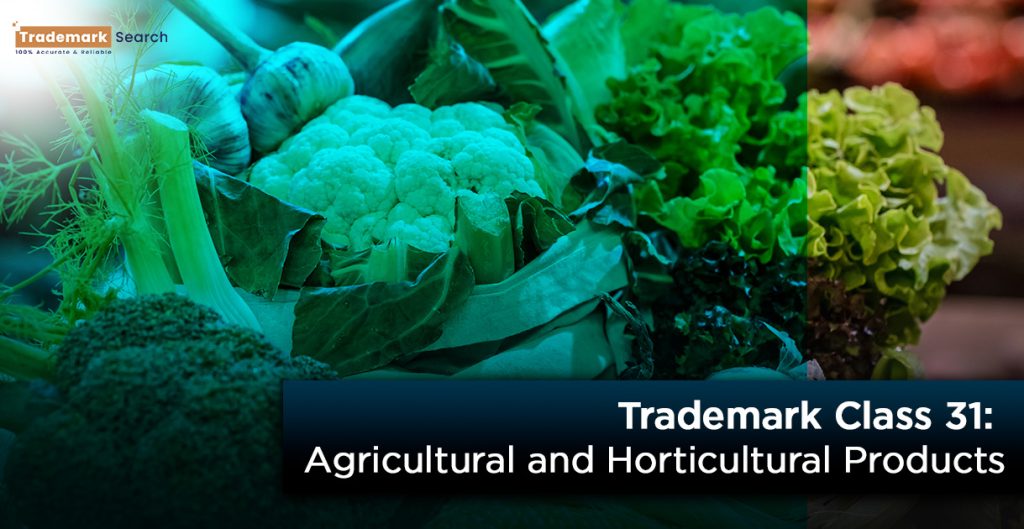

Trademark Class 31 mainly consists of raw and unprocessed agricultural and horticultural goods such as fresh fruit and vegetables, shrubs, flowers, seeds, seedlings for plantation, etc. This class also contains live animals and foodstuffs and beverages for animals.
Goods under Trademark Class 31
Given below are the types of goods under the scope of Trademark Class 31:
· Agricultural and Horticultural Products:
The primary inclusions in this class are fresh fruits and vegetables, mushrooms and truffles, fresh flowers, potted plants, cut flowers, seedlings, saplings, and decorative plants like orchids, roses, and tulips.
· Live Animals and Foodstuffs for Animals:
This class includes cattle, pigs, sheep, goats, poultry, chickens, ducks, turkeys, and other animals kept as livestock. Dogs, birds, fish, rabbits, hamsters, and other animals kept as pets are also included.
· Grains and Seeds:
Wheat, rice barley, oats, maize, quinoa, and other grains usually used to manufacture foodstuffs or used as food are some of the most important inclusions of this class. Tree seeds, agricultural seeds, flower seeds, etc., are also a part of Trademark Class 31.
· Raw and Unprocessed Agricultural Produce:
Unprocessed nuts, coffee beans, soybeans, lentils, chickpeas, etc., are also essential class members. Raw and unprocessed agricultural products are also included in this class.
· Malt:
Malt extracts, malted barley, rye, and other malts used in beer or whiskey are also included in this class.
The section right below will give a more detailed look into the goods included in this class.
Read More: Trademark Class 35: Business Services and Consulting
Detailed List of Goods under Trademark Class 31
A vast number of goods are included in trademark class 31. This section will cover all the goods more holistically and alphabetically. Remember that no such list can be exhaustive, but you will have a clear idea of the goods in Trademark Class 31 after going through this list.
| Goods List | Goods List |
|---|---|
| Algae | Aloe vera plants |
| Almonds | Abalones [live] |
| Active dried yeast for animals | Agricultural and aquacultural crop |
| Agricultural grains for planting | Agricultural produce (Unprocessed -) |
| Agricultural seeds | Algae powder for animal consumption |
| Algae, unprocessed, for human or animal consumption | Algarovilla for animal consumption |
| Aloe vera plants | Anchovy, live |
| Animal beverages | Animal feeds |
| Animal foodstuffs | Animal litter |
| Apple tree seeds | Apple trees |
| Apples (Unprocessed -) | Aquarium fish |
| Arrangements of dried flowers for decorative purposes | Arrangements of fresh fruit |
| Arrangements of natural flowers | Artichokes, fresh |
| Artificial milk for livestock offspring | Asparagus plants |
| Asparagus (Unprocessed) | Bagasse |
| Barley | Beans |
| Beetroots | Beverages for animals |
| Baby corns, fresh | Bagasses of cane |
| Bait, not artificial | Baled hay |
| Bark for use as animal litter | Bark for use in mulching |
| Bark mulches | Barley |
| Barley for use in brewing beer | Beans, fresh |
| Bedding materials for animals | Bee pollen (Unprocessed) |
| Beef cattle | Beer barley |
| Bees | Beet, fresh |
| Berries, fresh fruits | Berries (Unprocessed) |
| Betel nuts, fresh | Beverages for animals |
| Biodegradable mulching plates made of wood fibres | Bird food |
| Birdseed | Biscuits made from cereals for animals |
| Biscuits (Malt) for animals | Blue mussels (live) |
| Bones for dogs | Bran |
| Bran mash for animal consumption | Brine shrimp for fish food |
| Buckwheat, unprocessed | Bulbs (Flower) |
| Bulbs (Plant) for agricultural use | Bulbs (Plant) for horticultural use |
| Bumblebees | Bushes (shrubs) |
| By-products of the processing of cereals for animal consumption | Calamari, live |
| Cannabis plants | Cannabis, unprocessed |
| Capsicums | Carp (Live, Fish) |
| Carrots (Fresh) | Cat food |
| Cat litters | Cat treats |
| Catnip | Cats |
| Cattle food | Cellulose for use as animal bedding |
| Cereal-based foodstuffs for animals | Cereals for animal consumption |
| Cereals (Raw) | Cherries (Fresh) |
| Chestnuts, fresh | Chewing bones for dogs |
| Chews for animals | Chicory, fresh |
| Chicory roots | Chillies (Unprocessed) |
| Christmas trees | Citrus fruit |
| Climbers (plant type) | Cocoa beans (Unprocessed) |
| Coconut fibre mulches | Coconut shells |
| Coconuts | Cocoons for Silkworm Breeding |
| Cola nuts | Cones (Pine) |
| Conifer trees | Corn husks, dried for decoration |
| Corn | Courgettes |
| Crabs, live | Crayfish, live |
| Crop seeds | Crustaceans live |
| Cucumbers, fresh | Culinary herbs (Fresh) |
| Cut flowers | Cuttings (Plant) |
| Cuttlebones for birds | Cuttlefish bones |
| Digestible chewing bones and bars for domestic animals | Digestible chewing bones for dogs |
| Distillery waste for animal consumption | Dog food |
| Dog treats | Dogs |
| Dried alfalfa for animals | Dried boutonnieres |
| Dried cattails for decoration | Dried corsages |
| Dried flowers | Dried flowers for decoration |
| Dried herbs for decoration | Dried plants |
| Dried plants for decoration | Durian saplings |
| Edible baits | Edible bird treats |
| Edible bones and sticks for pets | Edible chewing products for domestic animals |
| Edible chews for animals | Edible flowers, fresh |
| Edible chew toys for animals | Edible lily bulbs, fresh |
| Edible nuts (raw, unprocessed) | Edible pet treats |
| Edible seeds (unprocessed) | Edible silvervine powder for pet cats |
| Edible treats for animals | Egg-laying poultry |
| Eggplants | Eggs for hatching, fertilized |
| Feeding preparations for bees | Ferns |
| Fertilised eggs for hatching | Fir trees |
| Fish eggs for hatching | Fish food |
| Fish, live | Fish spawn |
| Fishing bait, live | Flax plant seeds |
| Flax plants | Flaxseed for animal consumption |
| Floral decorations | Flounders, live |
| Flower bulbs | Flower corms |
| Flower seeds | Flowering plants |
| Flowers, dried, for decoration | Flowers |
| Flowers (Wreaths) | Fodder |
| Foliage plants | Food for animals |
| Food for aquarium fish | Food for cattle |
| Forage for animals | Formula animal feed |
| Fortified food substances for animals | Freeze-dried fishing bait |
| Fresh vegetables | Fresh fruits |
| Fresh mushrooms | Fresh nuts |
| Fresh beans | Fresh roots |
| Fresh seeds | Fruit, fresh |
| Fruit plants | Fruit seeds |
| Fruit shrubs | Fruit trees |
| Fungi | Garlands of natural flowers |
| Garlic, fresh | Germinated seeds |
| Ginger, fresh | Goldfish |
| Grains (for human food manufacture) | Grains for animal consumption |
| Grain seeds | Grapevine trees |
| Grapefruits | Grapes, fresh |
| Grass seeds | Grasses |
| Ground bait (natural) | Hamster food |
| Hamsters | Hay |
| Hazelnuts, fresh | Hemp plants |
| Hemp seeds, unprocessed | Herbs, dried, for decoration |
| Herbs (Fresh) | Hop pellets (for breweries) |
| Hop saplings | Hops |
| Horse feed | Horseradishes, fresh |
| Horticultural mulches | House plants |
| Hybrid wheat seeds | Hydroponic plants |
| Hydroponic seeds | Juniper berries |
| Kitty litter | Kola nuts |
| Kumquats | Koi carp, live |
| Krill, live | Leaf mustard, fresh |
| Leeks, fresh | Leguminous plants |
| Lemons, fresh | Lentils, fresh |
| Lettuce, fresh | Lichees, fresh |
| Lime for animal forage | Linseed meal for animal consumption |
| Litter for animals | Litter peat |
| Live animals (as pets, cattle, etc.) | Livestock |
| Livestock fattening preparations | Livestock feed |
| Lobsters, live | Locust beans, raw |
| Longkongs, fresh | Loose hemp for use as animal bedding |
| Maize | Maize seeds |
| Maize products for consumption by animals | Malt |
| Malt extracts for consumption by animals | Malt for brewing and distilling |
| Malt for distilling | Malt germs |
| Malted barley | Malts and unprocessed cereals |
| Mandarins (fresh) | Mash for fattening livestock |
| Melons | Menagerie animals |
| Milk-based foodstuffs for animals | Mineral salts for cattle |
| Mint [fresh] | Molluscs live |
| Moss (Irish) | Mulch |
| Mulch (Straw) | Mulches of natural materials |
| Mushrooms, fresh | Mussels, live |
| Mycelium for agricultural purposes | Natural bonsai trees |
| Natural flowering plants | Natural seeds |
| Natural turf | Non-debarked timber |
| Nursery plants | Nutrients for fish |
| Nuts, fresh | Nuts, unprocessed |
| Oats | Oats for consumption by animals |
| Oil cake | Oilseed meal for animals |
| Olives, fresh | Onions, fresh |
| Oranges, fresh | Organic fresh fruit |
| Organic fresh herbs | Organic fresh vegetables |
| Oyster mushrooms, fresh | Oysters, live |
| Paddy | Palm fronds |
| Palm trees | Peanuts, unprocessed |
| Pears, fresh | Peas, fresh |
| Peat litter for animals | Peat moss |
| Pet beverages | Pet birds |
| Pet food | Pig feed |
| Pigs | Pine cones |
| Pineapples | Plant bulbs for horticultural use |
| Pollen | Pomegranates |
| Pomelos, fresh | Potatoes, fresh |
| Potted fresh herbs | Potted plants |
| Poultry for breeding | Poultry, live |
| Powdered milk for animals | Prawns, live |
| Preserved crops for animal feeds | Preserved flowers |
| Processed animal feed | Pulses |
| Purslane, fresh vegetable | Rabbit food |
| Rapeseed meal for animal consumption | Raw and unprocessed agricultural products |
| Raw and unprocessed aquacultural products | Raw and unprocessed forestry products |
| Residual products of cereals for animal consumption | Residues from malt treatment for use as animal feed |
| Rhizomes | Rhubarb, fresh |
| Rice bran (for animal feed) | Rice meal for forage |
| Rice, unprocessed | Rose bushes |
| Roses | Rye |
| Rye seed | |
| Salad crops | Salaks, fresh |
| Salmon, live | Salt for cattle |
| Saplings | Sardines live |
| Seaweed, unprocessed, for human or animal consumption | Seed germ for botanical purposes |
| Seedlings for planting | Seeds for flowers |
| Seeds for fruits | Seeds for vegetables |
| Seeds (Plant) | Shrimps, live |
| Shrubs | Silkworm eggs |
| Silkworms | Snails (live) |
| Snow crabs, live | Sod |
| Soya beans, fresh | Spanish mackerel, live |
| Spinach, fresh | Spores for agricultural purposes |
| Sprouted seeds | Squashes, fresh |
| Squid, live | Straw |
| Straw mulch | Strawberries |
| Sugarcane | Sunflower seeds |
| Synthetic animal feed | Tangerines, fresh |
| Timber (Undressed, Unsawed) | Tomatoes, fresh |
| Trees | Truffles, fresh |
| Tuna, live | Turf, natural |
| Turkey hens (as poultry) | Unprocessed and raw natural products |
| Unprocessed agricultural produce | Unsawn and unseasoned timber |
| Vegetables (fresh) | Vegetable seeds |
| Vines (plants) | Water chestnuts, fresh |
| Watermelon, fresh | Weeds for human or animal consumption |
| Wheat | Wheat bran |
| Wheat seed | Wildlife seed mixtures |
| Wreaths of dried herbs for decoration | Wreaths of natural flowers |
| Yeast for animal consumption |
Some Famous Class 31 Trademarks
Since agriculture is one of the most prominent human activities and the basis for most of the food we consume, an equally large number of companies sell these products, some have gained a massive name for themselves, and a few of these have been mentioned below.
- Dole: Dole is famous for its pineapples and salads, especially its cupped fruit salads and cut fruits. It started in the 1850s in Ireland and has become a global leader, amassing $6.5 billion in revenue in FY2021.
- Pedigree: One of the world’s largest manufacturers of dog food, pet food and nutritional pet products. Pedigree petfoods is a subsidiary of Mars, an American multinational company that manufactures many food products, pet products, etc.
- Whiskas: Whiskas is another Mars subsidiary. It specialises in cat food, started in the United States in 1958, and expanded globally.
- Monsanto: Monsanto has been an agribiotech company since 1901. It sells seeds, seedlings, genetically engineered plants, crop protection chemicals, and more. In 2018, it ranked 199th on the list of Fortune 500 companies by revenue, making it one of the largest corporations worldwide.
- Quaker Oats: Quaker Oats is a famous cereal company and multinational conglomerate that has been operating since 1877. It manufactures many breakfast cereals but is most famous for its oat-based offerings.
- MaltEurop: Founded in 1961, MaltEurop is the leading supplier of malt and malt extracts to breweries and distilleries.
Goods NOT Included under Trademark Class 31
As the class covers a wide range of goods and services, it is essential to know which goods are excluded because of various functional, worldly, or processing levels.
The goods that are not included in trademark class 31 are:
· Medicated Animal Feed or Dietary Supplements for Animals:
Animal feed, medicated to fight diseases or deficiencies, or dietary supplements and meal replacements for animals are not included in Trademark Class 31. These are included in Class 5 (Pharmaceuticals).
· Tobacco and Tobacco Products:
Cigarettes, Cigars, tobacco substitutes, herbs for smoking, etc., are excluded from Trademark Class 31 and are a part of Class 34 (Tobacco and Tobacco Substitutes).
· Processed Food items:
Processed or cooked food products are not included in Trademark Class 31. This range of food items is classified under Classes 29, 30, 32, and 33. Class 31 is reserved for raw and unprocessed agricultural products. Once processed and used to manufacture human food, they are included in the above-mentioned classes.
· Medical Purpose Goods:
Class 5 (Pharmaceuticals) covers medicinal herbs, medicines, and other pharmaceuticals for animals and humans.
· Rice:
Rice is covered under Class 30 (Foodstuffs of Plant Origin), which covers other food products such as coffee, pasta, bread, sago, and tapioca.
· Animals Skins and Hides:
Animal skins and hides are a part of Class 18(Leather and Leather Products).
· Chemicals:
Chemicals used in agriculture, such as pesticides, fungicides, insecticides, etc., are excluded from Class 31 and are part of Class 1 (Chemicals).
Read more: Trademark Class 32: Water and Non-Alcoholic Beverages
Corresponding Classes of Trademark Class 31
Corresponding or related classes are the classes whose goods are related to the goods of the concerned class, which in this case is Trademark Class 31. Corresponding classes closely resemble the concerned class and are often selected when goods are trademarked under multiple classes.
The corresponding classes of Trademark Class 31 are:
· Class 29 (Foodstuffs of Animal Origin):
Class 29 includes meat, poultry, eggs, game, oils, fats, and other foodstuffs primarily of animal origin. It also contains milk, dairy products, and substitutes such as soy and oats. Processed and preserved fruit and vegetable products, such as jams, jellies, compotes, etc., are also included in this class.
· Class 30 (Foodstuffs of Plant Origin):
This class consists primarily of foodstuffs of plant origin, such as flour, tapioca, pasta, noodles, coffee, tea, rice, etc. This class also contains condiments and spices. Any food product that can be associated with having its origin from a plant is categorised in this class. Breads, pastries, confectionary, and other bakery items are also a part of this class.
· Class 32 (Beer and Non-alcoholic Beverages):
Class 32 consists of fruit juices and drinks, aerated and non-aerated beverages, syrups, and other preparations for making beverages.
· Class 5 (Pharmaceuticals):
Class 5 includes medicines, Medicinal Preparations, Medicated Food Items, Dietary Supplements, and Meal Replacement Options for humans and animals.
Benefits of Trademarking Your Goods
Getting a trademark for your brand or products may mean a lot in the long and short term. Trademarks ensure that competitors cannot copy your products and their identity and profit from your brand and hard work. Trademarks give you the legal protection you require to fight the infringement of your intellectual property.
There are several benefits to getting a trademark registration for your brand or product. Some of them are:
- Legal Protection: The first and foremost benefit of acquiring a trademark registration for your product is that you get the exclusive legal right to use the trademark. No competitor can use the trademarked intellectual property to replicate or mimic your product or service. Any offence of the same would result in legal action against the accused.
- Marketing Tool: As pieces of intellectual property and creative nature, trademarks are excellent tools for pivoting marketing efforts. Some famous jingles of the old era or iconic mascots representing brands and trademarks are beautiful tools for framing marketing campaigns that people remember.
- Brand Identity: Trademarks serve as identity proof in the marketplace. They help your customers understand which product they are picking. Trademarks allow you to differentiate your product offerings and make them recognisable to the average consumer.
- Licensing Opportunities: No one can use a trademark that you own without legal permission. This gives rise to several licensing opportunities and the chance to acquire more revenue streams. Licensing your trademark means allowing someone to use it in return for compensation or royalties.
Conclusion
As we can see, Class 31 revolves around raw and unadulterated foodstuffs straight from agricultural ventures. This class is the basis of all other courses containing human food products. Even the seeds, grains, saplings, etc., required to produce food in its most primitive state are a part of this class.
Entities interested in trademarking goods under Class 31 must ensure that their product serves a distinct function and has an identity. For example, you cannot trademark a flower. However, flower seeds for different kinds of flowers can easily be trademarked. Similarly, specific concerns should be taken to ensure that seeds, grains, and other essential items are not withheld from where they are needed.
Other than agricultural and horticultural products, live animals such as livestock are included under Trademark Class 31. Pet food is also a significant component of this class. Again, empathy goes a long way, and one should ensure that one’s intellectual property does not infringe on someone’s right to access essential foodstuffs.
Visit the trademarksearch and get expert assistance for trademark Objection and trademark monitoring.
Frequently Asked Question
What is Trademark Class 31?
Trademark Class 31 is a division of goods and services for trademarking purposes. This class contains agricultural and horticultural products that have not been processed and are in their natural state. Examples include grains, seeds, flowers, etc.
Is rice a part of Trademark Class 31?
No, rice is not covered under Trademark Class 31. It has been placed in Class 30 (Foodstuffs of Plant Origin). Class 31 is not focused on food, even though grains and seeds may be used to create food products later.
Who is the Indian authority for trademarks?
The Indian Trademarks Registry is concerned with providing and overseeing trademarks in India.
How can I get my product trademarked?
A duly filled application describing the product’s nature and scope of use must be submitted to the Indian Trademarks Registry. After careful consideration and ensuring that a similar trademark does not already exist, the Indian Trademarks Registry grants the trademark certificate.
What are some exceptions to Trademark Class 31?
Rice, tobacco and its substitutes, medicinal preparations, food for humans, etc., are the main exceptions to Class 31. Although they can be considered part of Trademark Class 31 since they are agricultural produce, their nature as food items categorises them elsewhere.
How long is a trademark valid for?
A trademark is initially valid for ten years, after which it must be renewed every ten years.
Are Class 30 and Class 31 related?
Class 30 contains food products of plant origin, such as tea, coffee, rice, tapioca, flour, etc., whereas Class 31 contains agricultural and horticultural items not meant as food in their current state.
What is a trademark class?
For trademarking purposes, goods and services have been divided into 45 classes, each containing a different range of goods and services.
Read More Blogs: All about Trademark Class 30: Staple Foods and Beverages