All About Trademark Class 2 – Paints, Varnish and Coatings

A trademark is any word, phrase, symbol, or design that differentiates the origin of one party’s products from that of others. Simply put, a trademark is the gateway to protect a brand’s identity against unauthorised use and infringements. A trademark is a shield that grants a brand-specific right and empowers it to exercise legal recourse if its privileges are breached. Trademark is the armour that helps a brand preserve its unique identity and goodwill.
However, before proceeding further to in-depth overview of trademark class 2, let us understand what exactly a trademark is! According to the Trademark Act of 1999, “Trademark means a mark capable of being represented graphically and which is capable of distinguishing the goods or services of one person from those of others and may include the shape of goods, their packaging, and combination of colours.”
What is Trademark Class 2?
Trademark classification is essential to protect the brand. India follows the 10th edition of the Nice Classification system, which recognises 45 trademark classes. The Nice Classification (NCL) was formed under the Nice Agreement (1957) for the international classification of goods and services. This system has divided the goods into 34 classes (Classes 1-34) and services into 11 classes (Classes 35-45).
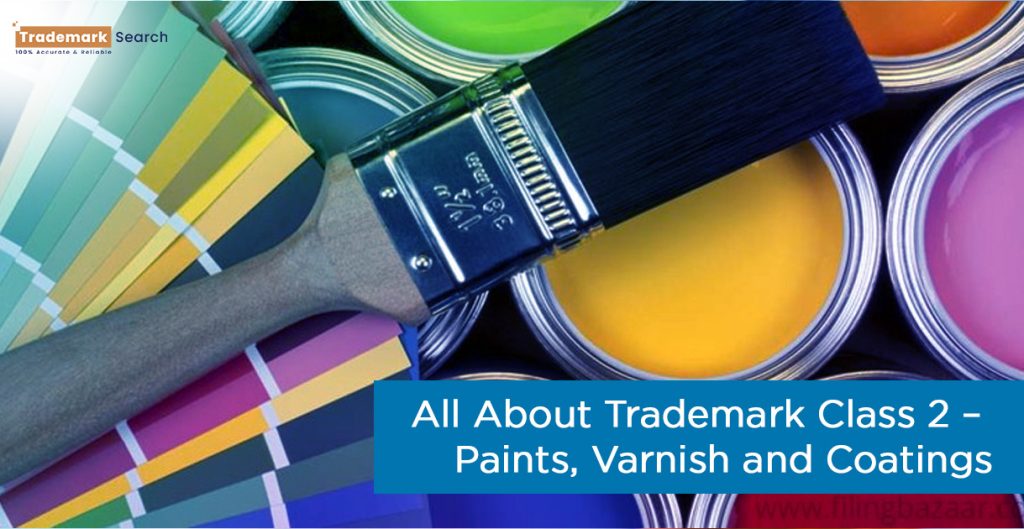
Out of these classifications, the one that businesses involved in the paint, varnish, and coatings industry should know is Trademark Class 2. This trademark comprises products important in various sectors, such as construction and fine arts. Class 2 trademark specifically includes:
- Paints– Include all types of paints used for various surfaces. These surfaces include wood, metal and walls.
2. Colorants – Colorants comprise different types of dyes, pigments, and other ingredients used to add colour to various materials.
3. Varnishes & Lacquers—These include all the protective finishes or coatings that boost the appearance and durability of surfaces. Vanishes and lacquers add a tinge of glossy or matte finish, which in turn offers protection against wear and tear, moisture, and other environmental factors.
4. Mordants—These include all the substances used in dyeing processes. They help fix the colours of fabrics or other desired materials.
5. Wood Preservatives—These wood preservatives are products meant to protect wood from factors such as decay, insects, and other damaging elements.
6. Natural Resins—Natural resins are raw resins obtained from plants or trees. They are used in making varnishes, adhesives, and other products.
7. Rust Preservatives – Rust preservatives comprise chemicals that prevent rust on metal surfaces.
8. Metal Foils & Powders – Painters, decorators, printers, and artists commonly use these products. These products come in handy for various creative and functional applications.
Read more: Throwing Light on Trademark Class 1: Chemicals
Why is Trademark Class 2 Registration Important?
Let us understand why a trademark Class 2 is important and how one can protect their brands in this class. Trademark Class 2 is important as it covers products such as paints, varnishes, coatings, etc., and offers necessary legal defence for businesses in these industries.
Class 2 trademark essentially helps maintain brand integrity and ensure long-term success in the competitive market of paints and coatings. The reason why it matters:
- Legal Protection – Class 2 Trademarkoffers special rights to use the trademark for paints, varnishes, and coatings. In turn, it thwarts others’ attempts to use similar marks and covers the legal rights of trademark owners.
2. Brand Recognition – Trademarks play a pivotal role in establishing a distinct identity for a brand in the market. This brand identity makes it easy for customers to recognise one’s products and helps them make an informed buying choice.
3. Market Positioning– Trademark class 2 enables a brand to protect its competitive edge through legal provisions that safeguard the brand’s exclusive elements within this industry.
4. Avoiding Disputes—This trademark helpsbusinesses reduce the risk of trademark conflicts with other businesses in the same industry since it offers legal recourse to the original trademark owners.
5. Consumer Trust—This trademark strengthens consumer confidence in the product by validating its quality and authenticity.
How is Trademark Class 2 Registration Represented?
Trademark registration is essential to protect one’s brand and to preserve its unique identity. Trademark Class 2 grants exclusive legal rights to use the mark, which avoids its unauthorised use and infringements. A registered trademark boosts brand value and recognition creates consumer trust and encourages loyalty. It provides brand protection across India and the exclusive right to use the ® symbol, which indicates its official registration. The ® symbol boosts the value of the business in the form of an intangible asset, which in turn offers opportunities for licensing and expansion. Therefore, trademark registration is crucial for maintaining a competitive edge and safeguarding the brand’s future growth and success.
Types of Goods Under Trademark Class 2
The total number of goods that fall under the Trademark Class 2 category is 538. We have compiled a list of some of the products from this trademark class, which include the following:
| Products | Products | Products | Products |
| Acid dyes | Acrylic paints | Agglutinates for paint | Alcohol soluble dyes |
| Alizarin dyes | Aluminium paints | Aniline dyes | Annatto |
| Annatto [dyestuff] | Auramine | Automobile cooling system rust inhibitors | Damp-proofing paints |
| Engraving ink | Epoxy resin coatings | Exterior paint | Exterior paints |
| Fabric dyes | Fabric paints | Filled ink cartridges for photocopiers | Food colours for domestic use |
| Food colours for domestic use | Food dyes | Food dyes [food colorants] | French polish |
| Fungicidal paints | Gamboge for painting | Gilding preparations | Glazes [paints, lacquers] |
| Gold foil | Intaglio ink | paint | Interior paints |
| Lacquers | Lamp black [pigment] | Lead alloys in powder form for painting, decorating, printing and art. | Lead in powder form for painting, decorating, printing and art. |
| Mordants [fixatives] for water colours | Mordants [fixatives] like varnishes | Naphthol dyes | Nonferrous metals in powder form for use in painting, decorating, printing and art |
| Offset printing inks | Orange lead | Organic pigments | Organic thickening agents for paints |
| Pad printing inks | Paint crayons for marking livestock | Paint for artists | Paint for concrete floors |
| Paints for machinery | Paints for marine use | Silver leaf | Synthetic dyes |
| Tattoo colours | Tattoo inks | Tattooing ink | Thermochromic printing inks |
| Thickeners and hardeners for inks | Thinners for coatings | Titanium white | Toner |
| Treatment preparations for preserving wood | Turmeric used as a colorant | Turmeric [colorant] | Urushiol-based lacquers |
| Varnishes for protecting floors | Vehicle paints | Vermilion | Water-repellent paints |
| Water colour paints | White lead | Whitewash | Wood coatings [paints] |
| Xerographic toner | Xerographic toners | Yellowwood [colorant] | Zinc oxide [pigment] |
| Filled ink cartridges for printers | Filled ink cartridges for printers and photocopiers | Filled inkjet cartridges | Filled toner cartridges |
| Glazes [paints, lacquers] | Gold foil | Gold foil [leaf] | Gold leaf |
| Gold paint for ceramics | Gum resins | Gum turpentine | Gum turpentine for use as paint thinner |
| Wood stains and sealants | House paints and industrial coatings | Protective coatings for machinery and infrastructure | Art supplies like oil paints and acrylics |
Trademark Class 2 – The Exceptions
Like any other country, India also has specific products and services explicitly excluded from the trademark class to avoid overlap and warrant clarity. The Trademark Class 2 includes paints, varnishes, and coatings; let us explore the exceptions and comprise products that do not fall under Class 2. These include the following:
- Chemical Products – Trademark Class 2 does not include products such as unprocessed synthetic resins as they are already covered in the Class 1 Trademark.
2. Cosmetics & Personal Care—Cosmetic products such as hair dyes, cosmetic colourants, and other personal care products that fall under Class 3 are not covered in Trademark Class 2.
3. Medicinal & Veterinary Preparations—Products classified as medicinal and veterinary preparations are classified under Class 5 and not Class 2.
4. Paint Strippers & Rust Removers—Products categorised as paint strippers and rust removers are not covered under Trademark Class 2 since they are included in the Class 3 category. These products are used for cleaning purposes.
5. Food Colorants—Food colourants used as additives in food products are not classified as Class 2 because they fall under theClass 30 Trademark category.
Understanding Exceptions
Understanding these exceptions is very important since they help in the right classification of goods and services to ensure that the applicant’s trademark application covers the right kind of category. It must be noted that misclassifications can lead to the rejection of the application, which can, in turn, lead to the unsatisfactory protection of the brand.
Why Exceptions Matter?
Exceptions in Class 2 Trademark classification matter for the following reasons:
- Proper Classification – Ensuring that an applicant’s trademark application submits the correct class is filed to avoid legal actions is very important.
2. Comprehensive Protection—Exceptions are important to help cover all relevant features of the product line and ensure that no part of the business is left exposed.
3. Avoiding Conflicts – Exceptions help reduce the risk of conflicts with existing trademarks in different classes, which can lead to legal disputes.
How To Register for Trademark Class 2?
Trademark Class 2 registration is a systematic process for which an applicant must follow a step-by-step approach as follows:
- Perform a Trademark Search – Applicants must conduct a thorough search to check for existing trademarks to ensure that theirs is unique with distinctive features. This small, helpful step helps avoid legal conflicts and rejection of applications.
- Obtain Expert Guidance—Applicants who are bothered by the complex registration process should consider obtaining expert guidance. They should consult a trademark advocate or a professional consultant who can help them navigate the complexities of the registration process.
- Select the Proper Descriptions—The applicants must note the product or service descriptions the trademark applications cover. This is a must to safeguard the product and service comprehensively from violations and infringements.
- Fill out the Application Form—The next step in this process involves filling out the application form once. The form requires the applicant to provide details regarding the trademark’s design and submit owner information and business details.
- Document Submission—The next step involves getting all the documents ready and submitting them along with the form to support the application. These documents include identity proof, business certificate, and details about previously used trademarks.
- Payment of Application Fee—Once the documents are submitted, the next step requires an applicant to pay a fee. The cost depends on the type of application submitted.
- Await Approval—The next step in this process involves the trademark office validating the application form and documents. Meanwhile, the applicants await confirmation about the status of their application.
- Issue the Trademark—If the trademark officer finds any discrepancies or thinks that the application needs any changes, he then moves on to raise objections and reject the application. However, if the officer thinks that everything is okay, he proceeds to issue the trademark in the applicant’s name.
Requirements for Class 2 Registration
An applicant must fulfil specific requirements mandated under trademark registration under the Class 2 category. These include:
- A distinctive logo or brand name
- Evidence of business establishment
- A comprehensive description of goods
- Power of attorney (if necessary)
- Items Not Covered Under Trademark Class 2
- Products such as machinery, vehicles, and non-edible substances are generally excluded from Class 2
What are the four marks of a trademark?
The four marks of a trademark, often known as the functions or essential features of a trademark, include:
- Distinctiveness – A trademark must be good enough to differentiate the products or services of one business from another. It should certainly be unique and exclusive in a real sense and not just descriptive.
- Non-functionality – The primary objective of a trademark is to identify and distinguish the source of products or services. It should not be restricted to functional purposes only. Establishing brand identity is the essence of a trademark!
- Non-deceptiveness—A trademark must be true to its meaning and not mislead or deceive consumers about the nature, quality, or origin of the products or services it represents.
- Non-genericness—A trademark must be unique in its features. It should not be a standard or generic term for the products or services it identifies. It should be specific so that it quickly identifies the source.
Importance of Specimen for Class 2
It is important for an applicant to share samples of the mark that will be used in the commercial space. This is significant since that is how consumers will see it in the future. The sample should demonstrate the connection between the mark and the commercial product. Acceptable samples include tags, labels, containers, or displays associated with the product. However, copies or reproductions of the mark used with the products are also acceptable.
A label is a commonly accepted sample if the trademark is applied to the product or the containers in Class 2 through labels. Shipping or mailing labels may be accepted if they can showcase the appropriate usage and are affixed to the products or their containers—however, a mark used only as a trade name and not as a trademark is unacceptable.
The right way to protect a trademark is to stamp it on products or containers with labels or tags attached.
Conclusion
For businesses in the paints, varnishes, and coatings industry, it is essential to understand the exceptions within Trademark Class 2. A deeper understanding of the exceptions helps to comprehend accurate trademark registration, which in turn offers broader brand protection in the market. For more details, visit trademark search and get expert guidance for trademark objection and trademark monitoring.
Frequently Asked Question
What is Class 2 in trademark?
Class 2 trademark is related to a wide range of paints, varnishes, and colourants products.
Is colour a Class 2 trademark?
Colour trademarks usually fall under the Class 2 category if they are related to paints and varnishes. However, an applicant should check for exceptions before applying.
Does hair dye fall in the Class 2 trademark category?
No hair dye does not fall in the Class 2 trademark category as it is a part of trademark Class 3—the Class 3 category deals with cosmetics and cleaning preparations. Class 3 typically includes different cosmetic preparations, such as hair dyes, skin care products, perfumes, and other personal care items.
What are the four marks of a trademark?
The four marks of a trademark, often referred to as the functions or essential characteristics of a trademark, are
1. Distinctiveness
2. Non-functionality
3. Non-deceptiveness
4. Non-genericnessWhat types of products are covered under Class 2 registration?
The Class 2 trademark includes products like paints, varnishes, preservatives, colourants, and metals in a form used for painting, decorating, and protecting surfaces.
Are there any products excluded from trademark Class 2 registration?
Some products that are connected to paint and coatings, such as raw artificial resins (Class 1) and hair dyes (Class 3), are not included in Class 2. Accurate categorization is crucial to prevent rejection and guarantee trademark protection.