Trademark Class 9: Computer, Software and Electronic Devices
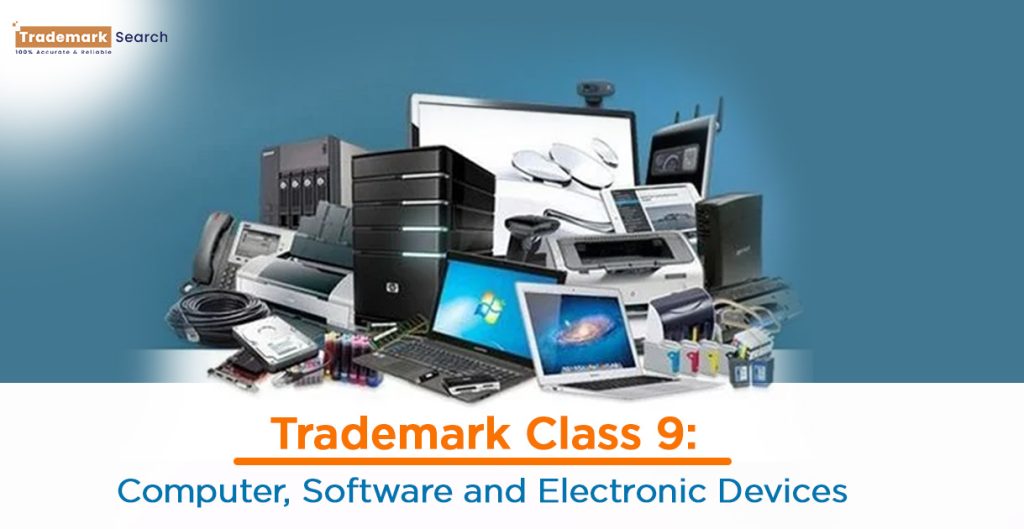

Trademark Class 9 consists of electronic devices, computers, computer peripherals, software, applications, scientific apparatus, and other electronic apparatus—everyday consumer electronics such as smartphones, smartwatches, electronic audio devices, etc. The definition of ‘electronics’ is vast, and certain exceptions must be considered when discussing Trademark Class 9.
Product Groups that Belong to Trademark Class 9
Given below is a list of specific product groups that characterise Trademark Class 9:
- Computers and Software:
Trademark Class 9 includes all computers, smartphones, tablets, and other smart devices, such as smartwatches. It also contains chargers and batteries of all types. Any software and application meant to run on such devices is included in Class 9. All computer peripherals, such as the mouse and keyboard, are also in the same class.
2. Audio-Visual Equipment:
Trademark Class 9 includes all products intended to create, record, transmit, and store audio-visual data. These products include televisions, speakers, effect pedals for musical instruments, projectors, microphones, and more. Any device used to listen to audio or visual messages is included in this class, along with its related products, chargers, batteries, and cables.
3. Scientific and Navigation Apparatus:
Trademark Class 9 includes simulation apparatus, compass, automatic steering systems, GPS systems, transmission hardware, software, and all scientific apparatus used in laboratories, such as precision instruments, spectrometers, microscopes, etc.
4. Robots:
Laboratory-use robots, artificial intelligence robots, surveillance robots, Unmanned Aerial Vehicles (UAVs), etc., all fall under Class 9. Industrial robots, however, are excluded from Class 9 and belong to Class 7 instead.
5. Telecommunication Devices and Surveillance Equipment:
Networking hardware such as modems, routers, fibre-optic cables, and other wires and cables for transmission fall under Class 9’s defined criteria. Satellite communication devices and other long-distance communication systems also fall under Trademark Class 9.
Read more: Exploring Trademark Class 10: Surgical and Medical Instruments
Types of Goods under Trademark Class 9
There are various categories of goods under Trademark Class 9. Given below is a comprehensive list of products included in Class 9, divided according to subcategories and product groups:
Computers and Software
| Goods List | Goods List |
|---|---|
| Computer game software, downloadable | Computer programs recorded |
| Laptops | Desktops |
| Tablets | Smartphones |
| Servers | External Hard Drives |
| Solid-State Drives | Cooling pads for laptop computers |
| Educational Software | Anti-Virus Software |
| Database Management Software | Web Browsing Software |
| Computer Utility Software | Mouse |
| Keyboard | Monitors |
| Artificial Intelligence Software | Virtual Reality Software |
| Augmented Reality Software | Cybersecurity Software |
| Interfaces for computers | Wearable computers |
Audio-Visual Equipment
| Goods List | Goods List |
|---|---|
| Speakers | Headphones |
| Home theatre systems | Audio interfaces |
| Audio mixers | Audio- and video-receivers |
| Audiovisual teaching apparatus | Equalizers |
| DVD Players | Blu-ray Players |
| Television apparatus | Karaoke Machines |
| Visual conference equipment | Projectors |
| Effect pedals for musical instruments | Cameras |
| Digital cameras | Camcorders |
Scientific and Navigation Apparatus
| Goods List | Goods List |
|---|---|
| Microscopes | Telescopes |
| Spectroscopes | Electron Microscopes |
| Centrifuges | Thermometers |
| Barometers | Hydrometers |
| Mass Spectrometers | Electrometers |
| Galvanometers | Voltmeters |
| Ohmmeters | Signal Generators |
| GPS Devices | Radar Systems |
| Sonar Systems | Compasses |
| Drafting Instruments | Surveying Equipment |
| Meteorological Instruments | Oceanographic Instruments |
| Geological Instruments | Seismographs |
| Gas testing instruments |
Telecommunication Devices and Surveillance Equipment
| Goods List | Goods List |
|---|---|
| Walkie-Talkies | Security Cameras |
| Antennas | Cables |
| Magnetic wires | Call Blockers |
| Modems | Paging Systems |
| Public Address Systems | Satellite Dishes |
| Satellite Phones | Routers |
| Night Vision Goggles | Cell Phones |
| Encryption Software | Fax Machines |
| Metal Detectors | Fire Alarms |
| Video Doorbells | Security Alarms |
| Network Switches | Telephone Answering Machines |
| Radio Frequency Identification (RFID) | Intercoms |
| Bluetooth Devices | Closed-Circuit Television (CCTV) Systems |
| Surveillance Drones |
Optical Apparatus
| Goods List | Goods List |
|---|---|
| Magnifying glasses | Eyeglasses |
| Contact lenses | Prisms |
| Lenses | Binoculars |
| Retinoscopes | Optical Apparatus and Instruments |
| Optical Character Readers | Optical Condensers |
| Optical Data Media | Optical Discs |
| Optical Fibers [Light Conducting Filaments] | Optical Glass |
| Optical Lanterns / Optical Lamps |
Some Famous Class 9 Trademarks
There are some widely recognisable trademarks in Trademark Class 9. Some of the most famous ones are:
- Apple: Apple is the top smartphone company in the world and a leader in personal computers. It is a name unknown to very few. Apple’s high-quality and sometimes premium offerings attract customers, and their unique design language makes them instantly recognisable.
- Intel: Intel is the biggest name in processor manufacturing and designing other internal components for computers. Its hardware components can be found in literally any household.
- Samsung: The leading manufacturer of smartphones and consumer electronics after Apple, Samsung is the more prominent name due to its much more comprehensive portfolio of products. For other mobile manufacturers, Samsung also manufactures many components, such as screens.
- Microsoft: Microsoft developed the most extensive ecosystem of operating systems, Windows. The company also manufactures consumer electronics and gaming consoles.
- LG: LG is another big name in household appliances and computer peripherals. They are responsible for developing some innovative technologies in the electronics space.
Read more: The Basics of Trademark Class 8: Hand Tools and Implements
Goods Not included in Trademark Class 9
Some goods, even electronics, are not included under the purview of Trademark Class 9 due to different reasons. These exclusions might seem similar to other inclusions of Class 9 but are left out for various reasons. Such goods are:
- Smart products with the same functionality: Smart products that retain their core function do not automatically transfer to Trademark Class 9. For example, bright clothing would still belong to Class 25 (Clothing and accessories). Similarly, intelligent briefcases would still be categorised as briefcases, excluding them from Class 9.
2. Industrial robots: All other robots are included in Trademark Class 9, except for robots used for industrial purposes such as assembly lines. Industrial robots are included in Class 7 (Machines and tools)
3. Medical electronic equipment: Body composition meters, pulse oximeters, heart rate monitoring apparatus, etc., are not included in Class 9 even though they are electronics. They find themselves placed in Class 10 (Medical equipment)
4. Coin-operated apparatus: Coin-operated apparatus also belong to their respective classes according to their functions. For example, coin-operated washing machines are placed in Class 7 (Machines and Tools).
5. Smart Toys and Joysticks: Smart toys belong to Class 28 (Games and playthings). Joysticks and controllers, depending on their function, also belong to different classes. Joysticks for games belong to Class 28, whereas joysticks for vehicles belong to Class 12 (Vehicles).
Corresponding Classes of Trademark Class 9
Corresponding or related classes of Class 9 are the classes that most closely resemble Class 9 products or their nature. This similarity might also confuse producers on how to classify their products. Corresponding classes for a particular class are also the ones most selected when a product or service is registered under multiple classes along with a concerned class.
The corresponding classes of Trademark Class 9 are:
- Class 7 (Machines and Tools): Scientific apparatus (Class 9) might be easy to confuse for machinery used for scientific purposes (Class 7). Class 7 includes all sorts of machinery, tools, equipment, etc., generally meant for industrial use. Industrial electronic devices fall under Class 9, whereas other machines generally don’t.
- Class 11 (Environmental Control Apparatus): Heating and lighting apparatus for homes, refrigerators, lamps, etc. are included in Class 11. Electronic scientific apparatus in Class 9 can overlap with Class 11 apparatus, such as lighting, heating, and dehumidifying systems.
- Class 12 (Vehicles): Class 12 includes all types of vehicles, including electric cars. Equipment such as engines, motors, etc., that is supposed to be used in vehicles also belongs to Class 12.
- Class 38 (Telecommunications Services): The provision of telecommunication services is subject to be trademarked under Class 38 of the NCL. On the other hand, the telecommunications equipment used to provide such services is included under Class 9.
- Class 42 (Scientific and Technological Services): Provision of scientific and technological services is subject to be trademarked under Class 42. Again, the equipment used in such provision of services is to be trademarked under Class 9.
Process of Getting Trademark Class 9 Registration
The trademark registration process requires several steps to be correctly taken care of. A comprehensive application must be made to the Indian Trademark Registry. Getting third-party help from experts is generally the best idea to navigate the legal trademarking space.
The comprehensive list of steps involved in the trademarking process is given below:
1. Trademark Search:
The process of trademarking begins with searching the comprehensive list of all existing trademarks to ensure that a similar trademark does not already exist. The Indian Trademark Registry maintains this list. If there is no similar trademark and the applicant has a unique trademark request, it can be taken forward.
2. Application:
An application must be made to the Indian Trademark Registry, which must contain the nature of the proposed trademark, details of the product, its intended use, etc. It should include all the details representing the trademark, an appropriately selected class, and the description of the product or service to which it will be affixed. The date of the trademark’s first or proposed use should also be mentioned.
3. Application Review:
The Indian Trademark Registry comprehensively reviews the application and tests its integrity and ingenuity. This may include contacting the applicant for further clarifications and additional information.
4. Publication in Trademark Journal:
If the Indian Trademark Registry accepts the application, the proposed trademark is published in the Trademark Journal. A four-month objection period follows, during which oppositions and objections are invited. Existing trademark holders who want to move against it for infringement can raise such objections.
5. Issue of Certificate:
Suppose there are no objections to the trademark, or the objection is settled in the applicant’s favour. In that case, the registrar issues the trademark certificate, which officially signals the trademark’s inclusion in the Indian Trademark Registry. The applicant can formally use the ™ symbol after their trademarked intellectual property and enjoy legal protection from infringement. The trademark remains valid for ten years, after which it must be renewed every ten years,
Benefits of Getting Registered under Trademark Class 9
There is a plethora of benefits that you can enjoy if you get your product or service trademarked. Not only does it ensure that competitors cannot copy your identity, but it can also have some long-term benefits you might not realise.
Some of the most prominent benefits of registering under Trademark Class 9 are:
- Brand Identity: Registering a trademark gives exclusive rights to the product’s symbol, word, slogan, or other associated intellectual property. It is an intellectual property that you own. A trademark can be crucial to creating and maintaining a distinguished brand identity. It helps customers identify your product in extensive competition, supporting brand loyalty.
2. Marketing Efforts: Trademarks serve as creative inputs to create successful marketing campaigns. Many companies have used trademarked works or slogans to distinguish their marketing efforts. A trademark becomes an easily recognisable symbol associated with your brand.
3. Legal Protection: As you have exclusive rights over your trademark and its use, any competitor who tries to replicate your identity by copying your trademark becomes liable to legal judgment and may land in heaps of legal trouble. It is the best tool to protect against infringement.
4. Market Positioning: A trademark helps you differentiate your brand. Used with clever marketing, a trademark becomes an efficient tool to ensure that consumers remember your product for an extended period and continue to buy it. Customer retention is critical to a sustainable business, and trademarks help significantly with that.
5. Licensing Opportunities: Getting exclusive rights to your product can open more revenue streams via licensing. You can license your mark to other entities and earn licensing fees.
Conclusion
Trademark Class 9 contains all kinds of computers, computer peripherals, software, applications, etc. This guide has covered all sorts of products in this class, how to register your product and what benefits you will enjoy if you do so! For further assistance in trademark search, To get expert assistance in trademark monitoring and trademark Objection, visit Trademark Search.
Frequently Asked Question
What is Trademark Class 9?
Trademark Class 9 of Nice Classification (NCL) comprises consumer electronic products such as computers, smartphones, and software. It also includes scientific and navigational equipment and audiovisual equipment.
Are computers included in Trademark Class 9?
Yes, computers are one of the most easily recognisable attributes associated with Class 9. Smartphones, smartwatches, tablets, etc., are other computers included.
Are there any exceptions to Trademark Class 9?
Yes, Smart products that still have their core functionality as something else are not included. This includes smart refrigerators, bright clothing, etc. Industrial robots are also excluded from this Class. Smart toys are also excluded.
Are batteries included in Trademark Class 9?
Yes, Trademark Class 9 includes all types of batteries, even chemical batteries. It also provides battery chargers and solar cells.
What are the corresponding classes for Trademark Class 9?
Some of the corresponding or related classes of Trademark Class 9 are Class 7 (Machines and Tools), Class 11 (Environmental Control Apparatus), Class 12 (Vehicles), Class 38 (Telecommunications Services), and Class 42 (Scientific Services).