Exploring Trademark Class 17: Rubber Products
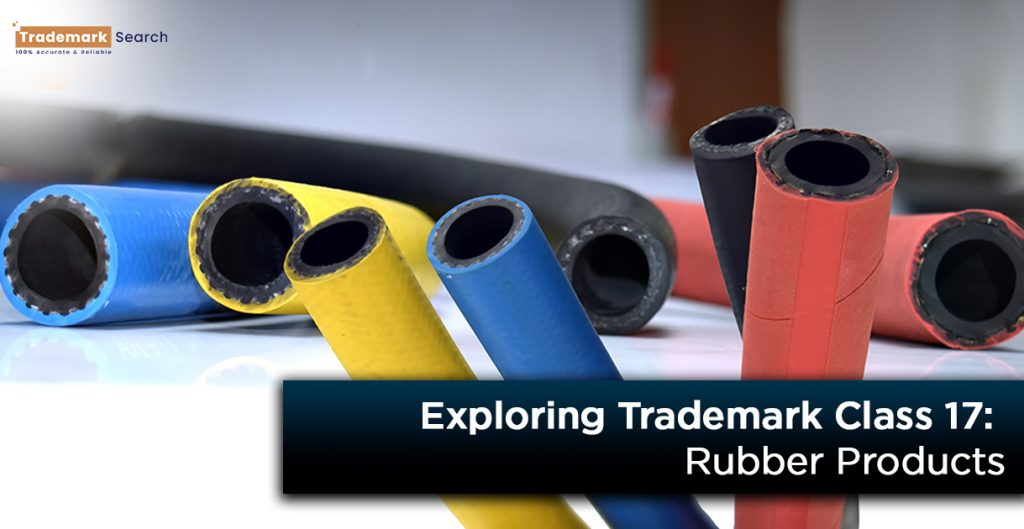

Trademark Class 17 contains many products, from unprocessed or semi-processed rubber to non-rigid pipes, tubes, and hoses. It also includes fittings, plastics, resins, packing material, gum, etc.
The main heads under Trademark Class 17 are:
- Rubber Products:
Different types of natural and synthetic rubber products, such as rubber gaskets, rubber padding, rubber bands, etc., are covered under Class 17. Metallic fittings or pipes that use rubber gaskets are not included in this class, as metallic pipes belong to Class 6.
- Packing Material:
Packing foam, insulating tape, insulating foams, soundproofing foams, foam rubbers, insulating paints, etc., are also part of Trademark Class 17, as are packaging films and plastics.
- Asbestos Products:
Asbestos sheets, fibres, padding, insulation, and other asbestos products are part of Class 17. Asbestos materials are generally used for firefighting gear and fire-proof fittings, ceilings, etc. However, the use of asbestos for these purposes has dwindled in recent times since it is highly toxic and can cause severe respiratory damage.
- Plastics and Pipes:
This class covers plastic rods, pipes, pellets, fibres, and other extruded plastics. Non-metal pipes are also included. Flexible pipes may be made of rubber, plastic, or other materials. Some examples of flexible pipes include garden hoses and irrigation pipes.
- Miscellaneous Items:
Mica and mica products, industrial gum and gum sheets, gutta-percha, and substitutes for the other products mentioned in this section are also a part of this class.
Read more: All About Trademark Class 18: Leather Goods and Accessories
Information of Goods Under Trademark Class 17
A wide variety of materials in Trademark Class 17 are used for industrial packing, insulating, and other purposes. Below is a list of goods under this class grouped by subheads:
Rubber and Rubber Products
| Goods List | Goods List |
|---|---|
| Rings of rubber | Rubber bags |
| Rubber material for recapping tyres | Rubber envelopes |
| Rubber seals | Rubber stoppers |
| Rubber sheets | Shock-absorbing rubber products |
| Rubber hoses (non-metallic) | Rubber seals and gaskets |
| Rubber bands | Rubber stoppers |
| Rubber padding and cushioning | Raw or semi-worked rubber |
| Natural rubber | Rubber threads (not for textiles) |
Asbestos Products
| Goods List | Goods List |
|---|---|
| Asbestos | Asbestos sheets |
| Asbestos cloth | Asbestos slate |
| Asbestos coverings | Asbestos packing materials |
| Asbestos fabrics | Other asbestos products |
| Asbestos felt | Asbestos fibres |
| Asbestos millboards | Asbestos packing |
| Asbestos paper | Asbestos Safety Curtains |
Pipes, Plastics and Resins
| Goods List | Goods List |
|---|---|
| Plastic films | Plastic filaments for 3D printing |
| Filtering materials of plastic | Flexible plastic hoses |
| Plastic padding material | Flexible rubber hoses |
| Plastic stuffing material | Non-metallic tubes and pipes for industrial use |
| Plastic fibres | Garden hoses (non-metallic) |
| Plastic sheets | Irrigation hoses (non-metallic) |
| Plastic filaments | Acrylic resins, semi-processed |
| Plastic pellets | Synthetic resins |
| Plastic tubes | Plastic granules |
Packing Material
| Goods List | Goods List |
|---|---|
| Insulating tape | Insulating oil for transformers |
| Insulating bands | Insulating oils |
| Insulating paints | Insulating paper |
| Thermal insulating materials | Insulating plaster |
| Acoustic insulating materials | Foam rubber for insulation |
| Pipe insulation | Packing foam |
| Insulating felt | Sealing compounds |
| Insulating gloves | Insulating materials |
Miscellaneous Goods
| Goods List | Goods List |
|---|---|
| Gutta-percha | Mica |
| Viscose sheets, other than for wrapping | Slag wool |
Some Famous Class 17 Trademarks
Some of the most famous Class 17 trademarks are:
- 3M: One of the biggest names in adhesive tapes, adhesives, and industrial materials, 3 M is the global leader in sticky note production and popularity. Post-It is a subbrand of sticky notes by 3M.
- Goodyear: Goodyear is a famous tyre manufacturer and maker of related products. Its founder, Charles Goodyear, invented the vulcanisation process, which made commercial rubber use possible.
- Saint-Gobain: Saint-Gobain is primarily a building design and construction company that also manufactures materials required for doing the same. They have been in business for more than 350 years.
- BASF: BASF is the world’s leading chemical company, which has been in business since 1865 and manufactures plastics, oil, gas, crop protection products, and more.
Goods NOT in Trademark Class 17
There are a lot of exceptions to this class, as even the same material can be excluded depending on how much it has been processed. Some goods that can seem similar but are not included under the purview of Trademark Class 17 are:
- Pipes for Sanitary Installations:
Sanitary installations and apparatus, such as bidets, showers, etc., are part of Class 11. Pipes for these are also part of Trademark Class 11, not Class 17. Class 17 only covers non-rigid pipes for non-sanitary installations.
- Insulating Glass for Building:
Building materials belong to Class 19 (Materials for building and construction).
- Goods with Other pre-defined Purposes:
Goods made up of materials from Class 17 but have a clear pre-defined purpose are classified according to that purpose. For example, rubber for dental purposes belongs to Class 5, and rubber patches for vehicle tyre repair are classified under Class 12 (vehicles).
- Metal and Non-metal Pipes:
Metal pipes belong to Class 6 (Metal goods and hardware items), whereas non-metal rigid pipes belong to Class 19 (Materials for building and construction.
Read more: Unveiling Trademark Class 16: Paper, Books and Stationery
Corresponding Classes of Trademark Class 17
Corresponding or related classes are the classes most similar in nature and function to the concerned class, which in this case is Trademark Class 17. The corresponding classes of Class 17 are:
Class 1 (Chemicals):
Raw materials and chemicals used in manufacturing plastics and rubber are classified under Class 1, even though plastics and rubber are under Class 17. Even more, these materials belong to other classes when they have pre-defined functions.
Class 7 (Machines):
Extrusion and moulding machines used to make plastic goods and pipes are classified under Class 7. This class contains all kinds of industrial machines, so many components in Class 17 are produced using Class 7 machines.
Class 9 (Electronics and Scientific Apparatus):
Insulation around copper wires and other electrical wires is a core part of those cables and wires; hence, it is included in Class 9 even though other insulating products are a part of Class 17.
Class 10 (Medical Equipment):
When restricted for medical use or use in hospitals, rubber pads, gaskets, tubes, pipes, etc., are covered under trademark Class 10.
Class 19 (Building and Construction Materials):
For construction purposes, non-metallic rigid pipes, cement, concrete, rebar, and even plastic pipes are classified under Class 19 instead of 17.
Class 22 (Ropes and Fabrics):
Ropes and fabrics made of rubber, plastic or other Class 17 materials are covered under Trademark Class 22.
Class 37 (Building and Construction Services):
Services related to construction, repairs, building, etc., are covered under Class 37. The use of materials in Class 17 for construction purposes is a service classified under a different class.
Class 40 (Treatment of Materials):
Material services such as rubber vulcanisation, steam or heat treatments for rubber and plastic, etc., are classified under Class 40.
Process of Getting a Trademark Registered under Class 17
India has a transparent trademark system. The Indian Trademarks Registry under the Office of the Controller General of Patents, Designs & Trade Marks (CGPDTM) is the supreme authority for trademark decisions. To get a trademark for your brand, you must file a duly filled application with the Indian Trademarks Registry.
The detailed step-by-step process is given below:
Trademark Search:
The process of trademarking begins with searching the comprehensive list of all existing trademarks to ensure that a similar trademark does not already exist. Indian Trademark Registry maintains a list of all existing trademarks. If there is no similar trademark and the applicant has a genuine and unique trademark request, it can be taken forward. If an identical trademark is found, you cannot proceed with your application, which will be scrapped.
Application:
An application has to be made to the Indian Trademark Registry, which contains the nature of the proposed trademark, details of the product or service, its intended use, etc. It should include details of the proposed trademark, an appropriately selected class, and the description of the product or service it will be affixed to. The date of the trademark’s first or proposed use should also be mentioned. It should also include details of your company.
Application Review:
The Indian Trademark Registry comprehensively reviews the application and tests its veracity and genuity. It may include contacting the applicant for further clarifications and additional information. Such clarification requests are usually time-bound, and the process halts if you cannot answer them in time.
Publication in Trademark Journal:
If the Indian Trademark Registry accepts the application, the proposed trademark will be published in the Trademark Journal. A four-month objection period follows, during which oppositions and objections are invited. Existing trademark holders who want to move against it for infringement can raise such objections.
Issue of Certificate:
Suppose there are no objections to the trademark, or the objection is settled in the applicant’s favour. In that case, the registrar issues the trademark certificate, which officially signals the trademark’s inclusion in the Indian Trademark Registry. The applicant can formally use the ™ symbol after their trademarked intellectual property and enjoy legal protection from infringement. The trademark remains valid for ten years, after which it must be renewed every ten years.
The Benefits of Getting a Trademark Registered
There are numerous benefits to trademarking your logo, tagline, or any other intellectual property associated with your good or service, such as packaging, design, etc. Trademarks ensure that your intellectual property and, by extension, your brand identity cannot be replicated or mimicked by your competitors to mooch off your success. Trademarking gives you exclusive ownership rights to your intellectual property, which is essential for legal protection.
The core benefits of getting a trademark for your brand are:
- Brand Identity: Trademarks help customers recognise your products in the marketplace. They serve as unique identity tags to help customers decide which product to buy. Umbrella trademarks can also signal quality and reliability.
- Legal Protection: The most crucial benefit of acquiring a trademark registration for your product or brand is the exclusive legal right to use the trademarked intellectual property. This means that no competitor can use the trademarked intellectual property to replicate or mimic your product or service, preventing instances where competitors want to steal your success and your success formula. Any offence of the same would result in legal action against the accused.
- Licensing Opportunities: No one can use your trademarked intellectual property without legal permission. This allows you to license the trademark to other entities in return for compensation and acquire more revenue streams. Licensing your trademark means allowing someone to use it in return for compensation or royalties.
- Marketing Tool: Trademarks have historically been significant elements of marketing campaigns. From the shape of the iconic Coca-Cola bottle to the famous bitten Apple logo, trademarks are a core component of marketing efforts and, when harnessed correctly, are remembered throughout the ages.
To Wrap Up
There are 45 different trademark classes for goods and services. This blog is all about Trademark Class 17, which covers rubber products, non-metallic packaging material or extruded plastics. You might have got a better overview of the various exceptions from this class and what its corresponding courses are. Visit trademark search and get expert guidance for trademark objection and trademark monitoring.
Frequently Asked Question
Are pipes a part of Trademark Class 17?
Non-metal and non-rigid pipes are part of Trademark Class 17. This includes pipes for irrigation, gardening, etc. Metal pipes belong to Class 6 instead, and other rigid pipes, such as PVC pipes, are part of Class 19 (Construction materials).
What is Trademark Class 17?
Trademark Class 17 contains various kinds of rubber products, resins, adhesives, pipes, asbestos products, etc. Packing and insulating materials are also covered under this class.
Is there any exception to Trademark Class 17?
Yes, rubber or plastic pipes and gaskets intended for medical use are not classified under Class 17 like all other rubber pipes. They are placed in Class 10 (Medical equipment) instead.
How many trademark classes are there?
There are 45 classes of goods and services for trademarking purposes in India. Classes 1 to 34 are reserved for goods, whereas Classes 35 to 45 are reserved for services.
What is the Nice Classification (NCL)?
The Nice Classification (NCL) is an internationally adopted standard of classifying goods and services according to their nature and functions. It is widely used for trademarking purposes. It was developed by the World Intellectual Property Organisation in 1957.
Who is the Indian authority on trademarks?
The Indian Trademark Registry is the authority for trademarks in India. It operated under the Office of the Controller General of Patents, Designs & Trade Marks (CGPDTM). Trademark applications are supposed to be filed with the Indian Trademarks Registry.
Is the insulation for electric wires included in Class 17?
The material insulating the wires is part of Class 17; however, finished cables and wires are part of Class 9 (Electronics and Computers).
Are adhesives included in Class 17?
When used for sealing and insulating purposes, adhesives are part of Class 17. Generally, adhesive chemicals and chemical compositions are a part of Class 1 (Chemicals).