Elucidating Trademark Class 33: Alcoholic Beverages
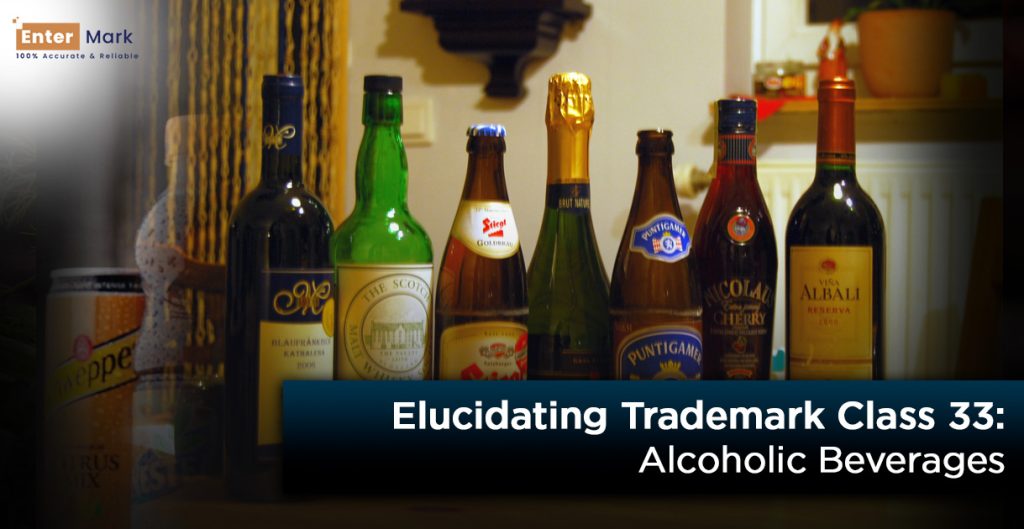

All alcoholic beverages and drinks are classified under this trademark class 33 except beer. Wines, ciders, spirits, liqueur, vodka, alcoholic fruit extracts, etc., are all covered under this class. If an entity is seeking trademark registration for its alcoholic beverage product, it must apply under trademark class 33.
Trademarks protect intellectual property, meaning the branding used on alcoholic beverage bottles, cans, cases, etc., can be trademarked. These branding elements may include colours, slogans, phrases, logos, packaging details, etc. These give a unique character to the products and help the customers identify them.
There are many different types of alcoholic beverages across countries and cultures, and variations exist even within the same type. As such, there are many alcoholic beverage offerings available in the market, with luxury options topping the price charts.
Read more: Trademark Class 32: Water and Non-Alcoholic Beverages
Detailed Information of Goods Under Trademark Class 33
Below is a comprehensive list of goods under the scope of Trademark Class 33-
| Goods List | Goods List |
|---|---|
| Absinthe | Aguardiente (sugarcane spirit) |
| Akvavit | Alcohol (Rice-based) |
| Alcoholic aperitif bitters | Alcoholic aperitifs |
| Alcoholic beverages | Alcoholic bitters |
| Alcoholic carbonated beverages, except beer | Alcoholic cocktail mixes |
| Alcoholic cocktails | Alcoholic coffee-based beverage |
| Alcoholic cordials | Alcoholic energy drinks |
| Alcoholic essences | Alcoholic fruit beverages |
| Alcoholic fruit cocktail drinks | Alcoholic fruit extracts |
| Alcoholic cocktails containing milk | Alcoholic jellies |
| Alcoholic preparations for making beverages | Alcoholic punches |
| Alcoholic tea-based beverage | Alcopops |
| Amontillado | Anise (liqueur) |
| Anisette | Aperitif wines |
| Aperitifs with a distilled alcoholic liquor base | Aquavit |
| Arak | Arrack |
| Beverages containing wine (spritzers) | Bitters |
| Black raspberry wine | Blackberry wine |
| Beverages (Alcoholic), except beer | Blackcurrant liqueur |
| Blended whisky | Brandy |
| Cachaca | Canadian whisky |
| Cherry brandy | Ciders |
| Cocktails | Coffee-based liqueurs |
| Cordials (alcoholic beverages) | Cream liqueurs |
| Curacao | Dessert wines |
| Digestifs [liqueurs and spirits] | Distilled beverages |
| Distilled rice spirits [awamori] | Distilled spirits |
| Distilled spirits of rice (awamori) | Dry cider |
| Fermented spirit | Flavored tonic liquors |
| Fortified wines | Fruit-based alcohols and alcoholic beverages |
| Fruit extracts, alcoholic | Fruit wine |
| Gin | Ginseng liquor |
| Grain-based distilled alcoholic beverages | Grape wine |
| Herb liqueurs | Hulless barley liquor |
| Hydromel [mead] | Japanese liquor containing herb extracts |
| Japanese liquor flavoured with Japanese plum extracts (Umeshu) | Japanese sweet rice-based mixed liquor (Shiro-take) |
| Japanese white liquor (shochu) | Kirsch |
| Korean distilled spirits (soju) | Korean traditional rice wine |
| Liqueurs | Liqueurs containing cream |
| Liquor-based aperitifs | Low alcoholic drinks |
| Low-alcoholic wine | Malt whisky |
| Mead | Mulled wines |
| Natural sparkling wines | Nira (sugarcane-based alcoholic beverage) |
| Peppermint liqueurs | Perry |
| Piquette | Potable spirits |
| Pre-mixed alcoholic beverages other than beer-based | Preparations for making alcoholic beverages |
| Prepared alcoholic cocktails | Prepared wine cocktails |
| Prepared shots of alcohol | Prepared drink mixes (containing alcohol) |
| Red ginseng liquor | Red wines |
| Rice alcohol | Rose wines |
| Rum | Rum-based beverages |
| Rum infused with vitamins | Rum punch |
| Rum-based ready-to-drink aerated beverages | Sake |
| Sake substitutes | Sangria |
| Schnapps | Shochu (spirits) |
| Sorghum-based Chinese spirits | Sparkling fruit wine |
| Sparkling grape wine | Sparkling red wines |
| Sparkling white wines | Sparkling wines |
| Spirits | Still wine |
| Strawberry wine | Sugar cane juice rum |
| Sugarcane-based alcoholic beverages | Sweet cider |
| Sweet wines | Table wines |
| Tonic liquor containing herb extracts (Homeishu) | Tonic liquor flavoured with Japanese plum extracts (umeshu) |
| Tonic liquor flavoured with pine needle extracts (Matsuba-Take) | Vodka |
| Vermouth | Whiskey |
| White wine | Wine |
| Wine-based aperitifs | Wine-based drinks |
| Wine-based aerated beverages | Wine punch |
| Yellow rice wine |
Some Famous Class 33 Trademarks
Alcohol has been a massive industry since time immemorial. As such, there are a lot of players in the market coming up with their variations of alcoholic drinks, hoping to capture the most market share. Given below are some of the most famous trademarks in the class:
- Johnnie Walker: The Johnnie Walker brand is internationally acclaimed as one of the best scotch whiskey manufacturers. Its iconic walking man with a cane and hat logo is an instantly recognisable photo for any alcohol consumer.
- Hennessy: Hennessy is the world’s largest cognac producer. It has the most significant US market share of cognac sales and is famous for its iconic bottle design. The brand was founded in 1765, making it over 250 years old.
- Grey Goose: This vodka brand is famous for its high-quality and iconic frosted glass bottle. Its flying goose logo has become a mark of quality among vodka drinkers. Grey Goose has been in business since the 1990s.
- Absolut: Absolut is another famous vodka brand, quite popular for its various flavours. Its bottle is instantly recognisable, and its iconic, blue-blocked logo is another renowned brand element. Absolut has been serving its vodka since 1879.
- Havana Club: Havana Club is a Cuban rum famous for its Cuban heritage. The brand was created in 1934 and is quite renowned for preserving cultural values and instilling a deep flavour in its product.
Goods Not Included in Trademark Class 33
The main exception to trademark class 33 is beer. Even though beer is an alcoholic drink, it has been placed in Class 32, which consists of non-alcoholic beverages, mixers, syrups for preparing beverages, aerated drinks, fruit drinks, etc.
The exceptions are summarised below:
· Beer and Brewery Products:
Beer and other brewed and aerated drinks fall under the purview of Class 32. This class also contains all other forms of beverages except alcoholic beverages.
· Cooking Wine and Alcohol for Cooking:
Wine and other alcohols for cooking, such as ciders, reductions, etc., are not included in Trademark Class 33 but are part of Class 30 (Foodstuffs of Plant Origins).
· Medicinal Beverages:
Medicinal drinks, syrups, etc., are part of Class 5 (Pharmaceuticals), which includes medicines, medicinal food, dietary supplements, meal replacements, and medicinal beverages.
· Non-Alcoholic and De-Alcoholised Beverages:
These are a part of Class 32. Fruit drinks, aerated beverages, syrups for making beverages, etc., are a part of this class. However, milk-based beverages are part of Class 29 and not Class 33.
Corresponding Classes of Trademark Class 33
Corresponding classes are the classes whose goods are similar to those of the concerned class, which in this case is Trademark Class 33.
Given below are the classes that correspond to Trademark Class 33:
· Class 5 (Pharmaceuticals):
This class contains medicinal beverages, both alcoholic and non-alcoholic. A lot of alcohol bases are used in syrups and different alternative medicine practices. Those are all included here.
· Class 29 (Animal Origin Foodstuffs):
This class contains dairy and milk-based beverages. Other than that, the class focuses on animal-origin foodstuffs such as meat, poultry, dairy, fats, etc. Preserved fruits and vegetables are also a part of Class 29.
· Class 30 (Plant-Origin Foodstuffs):
Non-alcoholic extracts and essences are a part of Class 30. Many ingredients used in making beverages, such as sugar, natural flavouring substances, etc., are also a part of this class.
· Class 32 (Non-Alcoholic Beverages):
This class is most directly related to Trademark Class 33. It contains non-alcoholic beverages, aerated drinks, fruit drinks, syrups for beverages, etc. Beer is the only alcoholic beverage included in this class. Non-alcoholic ciders and other brewery products are also included in this class.
Read more: All about Trademark Class 34: Tobacco and Smoking Products
Benefits of Trademarking Your Goods and Services
There are numerous benefits to getting your brand’s tagline, logo, symbols, colours, or other intellectual property trademarked. The first and foremost benefit is that it gives you the exclusive legal right to use that trademarked material. No one else, without your legal permission, can use intellectual property. This prevents competitors from stealing your ideas or trying to mimic your service. WIPO (World Intellectual Property Organisation) by the United Nations exists to uphold the integrity of trademarks and ensure that intellectual property worldwide is given the proper legal and commercial respect.
The main benefits of trademarking your product or service are:
- Brand Identity: Brand identity refers to the unique positioning of your product or service in the customer’s mind. Aesthetic and design choices, along with other branding decisions, determine the acceptability and rememberability of your product by the customer. Trademarking your brand’s intellectual property ensures that your brand identity is unique and that your product and its position in the market cannot be copied. Protecting your brand identity means survivability in the long term.
- Legal Protection: The most crucial benefit of acquiring a trademark registration for your product or brand is the exclusive legal right to use the trademarked intellectual property. This means that no competitor can use the trademarked intellectual property to replicate or mimic your product or service, preventing instances where competitors want to steal your success and your reputation. Trademark infringement lawsuits can result in jail time, fines, or both for the accused.
- Licensing Opportunities: No one can use your trademarked intellectual property without legal permission. However, with proper legal permission from the trademark holder, the trademark can be used. This means that if you are a trademark holder, you can allow entities interested in using your trademark to use it in return for compensation. This is known as trademark licensing. Trademark licensing is an excellent way of increasing your revenue by opening a new revenue stream.
- Marketing Tool: Trademarks have historically been significant elements of marketing campaigns. From the shape of the iconic Coca-Cola bottle to the famous bitten Apple logo, trademarks are a core component of marketing efforts and, when harnessed correctly, are remembered through the ages. It is essential to protect such iconic elements lest their significance and market presence be destroyed by plagiarism coupled with stiff competition. Trademarks are a core unit of a product, be it through design, packaging, colours, etc. These attributes are crucial in making a creative marketing campaign.
In the Nutshell
Alcohol is a significant part of the diet of many countries. Studies have shown that alcohol intake, when appropriately regulated, can also be beneficial. However, one must keep in mind the extensive dangers to physical health, mental health, and other detriments that come with alcohol abuse. Scientifically, Alcohol is an addictive substance that shouldn’t be consumed in large quantities.
Trademarks protect the intellectual property rights of the trademark holder. The intellectual property associated with alcohol is generally the shape of the bottle, the colours and the logos on the bottles. These helps build the brand’s reputation and give the customers something to return to.
Hence, we can see how important it is to establish a brand presence and maintain control of intellectual property assets. Trademark registration can be the right step for your business to flourish.
Register a trademark within Trademark Class 33 to ensure your reputation and guarantee your company’s success. For expert support, visit the trademark search.
Frequently Asked Question
What is trademark class 33?
Trademark Class 33 is a class of goods segregated for trademarking purposes. Class 33 is comprised of alcoholic beverages except beer.
Are non-alcoholic beverages included in Trademark Class 33?
No, Non-alcoholic beverages are not a part of Trademark Class 33. They typically fall under Class 32 (Non-Alcoholic Beverages). This class contains fruit drinks, aerated beverages, syrups for making beverages, etc. Medicinal beverages, on the other hand, fall under Class 5 (Pharmaceuticals).
Is beer a part of Trademark Class 33?
No, beer is the only alcoholic beverage not included in Class 33. It is a part of Class 32 instead.
Can I register a trademark for wine in Trademark Class 33?
Yes, wine is an alcoholic beverage for which a trademark can be registered in Class 33.
What is WIPO?
WIPO is a United Nations body. WIPO strives to attain international harmony over intellectual property rights and administration matters.
How can I get my goods trademarked?
After ensuring that your proposed trademark doesn’t already exist, a duly filled application to the Indian Trademarks registry must be made, including all the details of the proposed new trademark and your product or service. After allowing an objection period, the Indian Trademarks Registry grants the Trademarks certificate.
How long is a trademark valid for?
A trademark is valid for ten years after the initial issue of the trademark certificate. After that initial period, it must be renewed every ten years.
Read more Blogs: Trademark Class 32